Make Ahead Breakfast Casserole For Easter That Actually Holds Up
Easter morning sounds calm on paper. Light coming in sideways through the windows. Coffee. Kids half dressed. Someone peeling foil off chocolate eggs too early.
Reality is usually louder.
People wake up hungry at the same time. The ham’s not even warm yet. You’re still in socks and someone asks how long breakfast is going to take.
That’s where this casserole earns its place. Not because it’s flashy. Not because it’s trendy. Because it’s already done. It’s been sitting quietly in the fridge all night, waiting for heat. No scrambling. No last-minute panic. Just oven, timer, breathe.
I didn’t always respect it.
If you’re building an Easter spread and want a few more calm, dependable options on the table, start here and browse all Simply Cooking Recipes before you commit to anything complicated.
I Used to Think Breakfast Casseroles Were Lazy

I thought they were for people who didn’t want to cook. Throw everything in a pan. Hope for the best.
The first time I made one years ago, I didn’t toast the bread. Just cut it up, poured eggs over it, called it good. It baked fine. It looked fine. But the bottom layer was wet. That spongey, damp texture that clings to your fork.
It bothered me more than it bothered anyone else.
That’s usually how it goes.
I kept circling back to it. Adjusting. Watching. Paying attention to what actually changed the texture and what was just noise.
Now I respect it. Quietly. It’s not dramatic food. It’s steady food.
If you’re doing fruit on the side, keep it bright and sharp—my shaved fennel and apple salad is the kind of cold crunch that makes a rich casserole feel lighter without trying too hard.
The Bread Matters More Than You Think
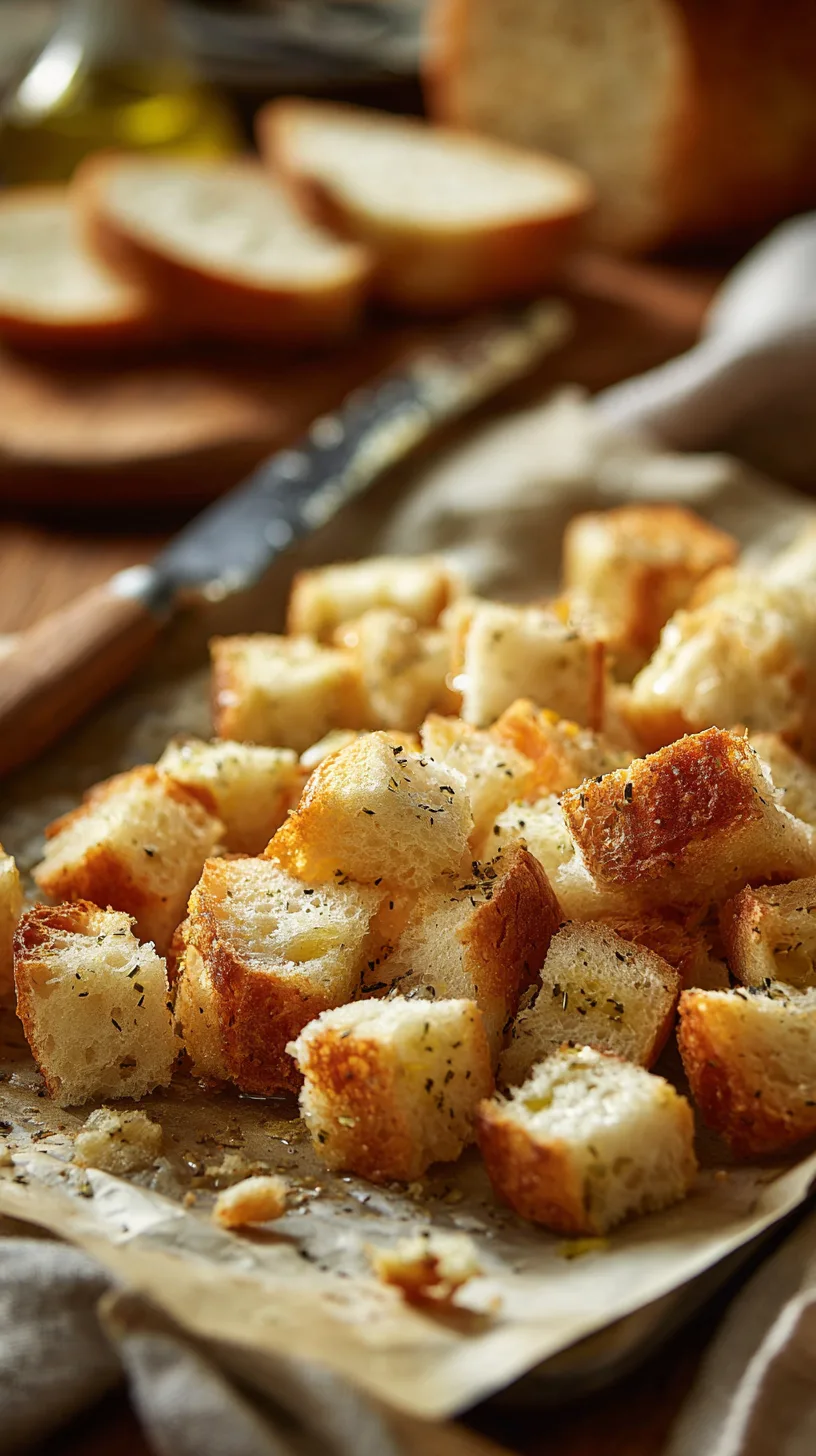
Pick up a loaf of day-old French bread and feel the weight. It should feel dry but not brittle. Light, but not hollow.
Fresh bread is wrong here. Too soft. It collapses under custard and you get that pudding texture that reads as underbaked even when it isn’t.
Day-old has structure.
But here’s the thing that made me stop rolling my eyes at breakfast casseroles. I toast the bread first. Not aggressively. Just enough butter and heat to crisp the edges and set the surface.
When the butter hits the pan it smells like Saturday morning. Slightly nutty. Warm. The bread cubes pick up color around the corners. That tiny crust becomes armor.
That’s what keeps the bottom from going soggy overnight.
If you’re looking for a photo moment, this is where you’d want one. The bread cubes golden at the edges, steam rising off a sheet pan.
It’s not dramatic. It’s subtle. But you taste it later.
When you’re browning the sausage and softening onions, you’re really just practicing clean heat control—this quick primer on the sauté cooking method lines up with the exact feel you want in the pan.
Sausage, Cheese, and the Weight of It in the Pan
Breakfast sausage is heavy in your hand. Dense. Salty. Fatty in the right way.
I cook it until it’s browned, not gray. You want caramelization. You want the smell to shift from raw pork to something deeper. That browned crust melts into the eggs later and seasons everything.
Onion and bell pepper go in next. They should soften, not disappear. Still have shape. Still a little bite.
Sharp cheddar is standard. It melts well. It behaves. Gruyère is the quiet addition I lean on. Slightly sweet. A little nutty. It stretches differently. It smells richer as it bakes.
When the eggs, milk, and cream get whisked together, the texture matters. It should feel smooth. Slightly thick from the cream. Not watery.
And yes, I add a touch of Dijon and dry mustard. Not enough to taste directly. Just enough to make the eggs taste more like themselves.
The Overnight Rest Isn’t Optional
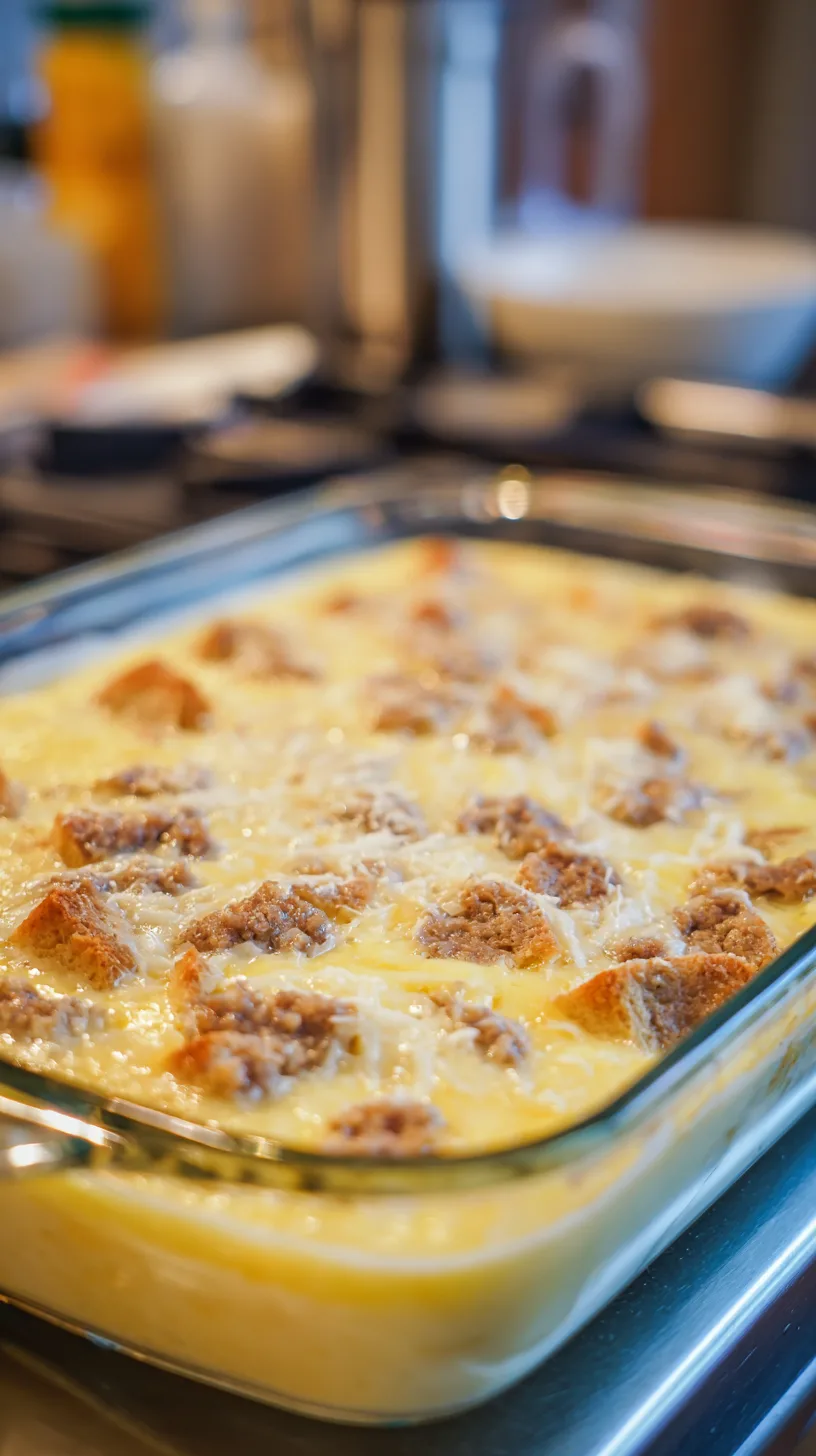
I’ve tried skipping it.
It’s never better.
Egg custard needs time to move. To soak into bread evenly. If you bake it too soon, the top cooks faster than the center and the layers never feel unified.
Overnight, the casserole settles. The bread absorbs. The sausage flavor moves. The herbs bloom just slightly.
When you pull it out of the fridge in the morning, it looks different. Heavier. Tighter. Like it decided what it’s going to be.
Let it sit on the counter while the oven heats. Cold glass straight into heat can crack. Cold custard into high heat cooks unevenly.
That’s not theory. That’s from watching pans split.
Baking Is About Feel, Not Just Time
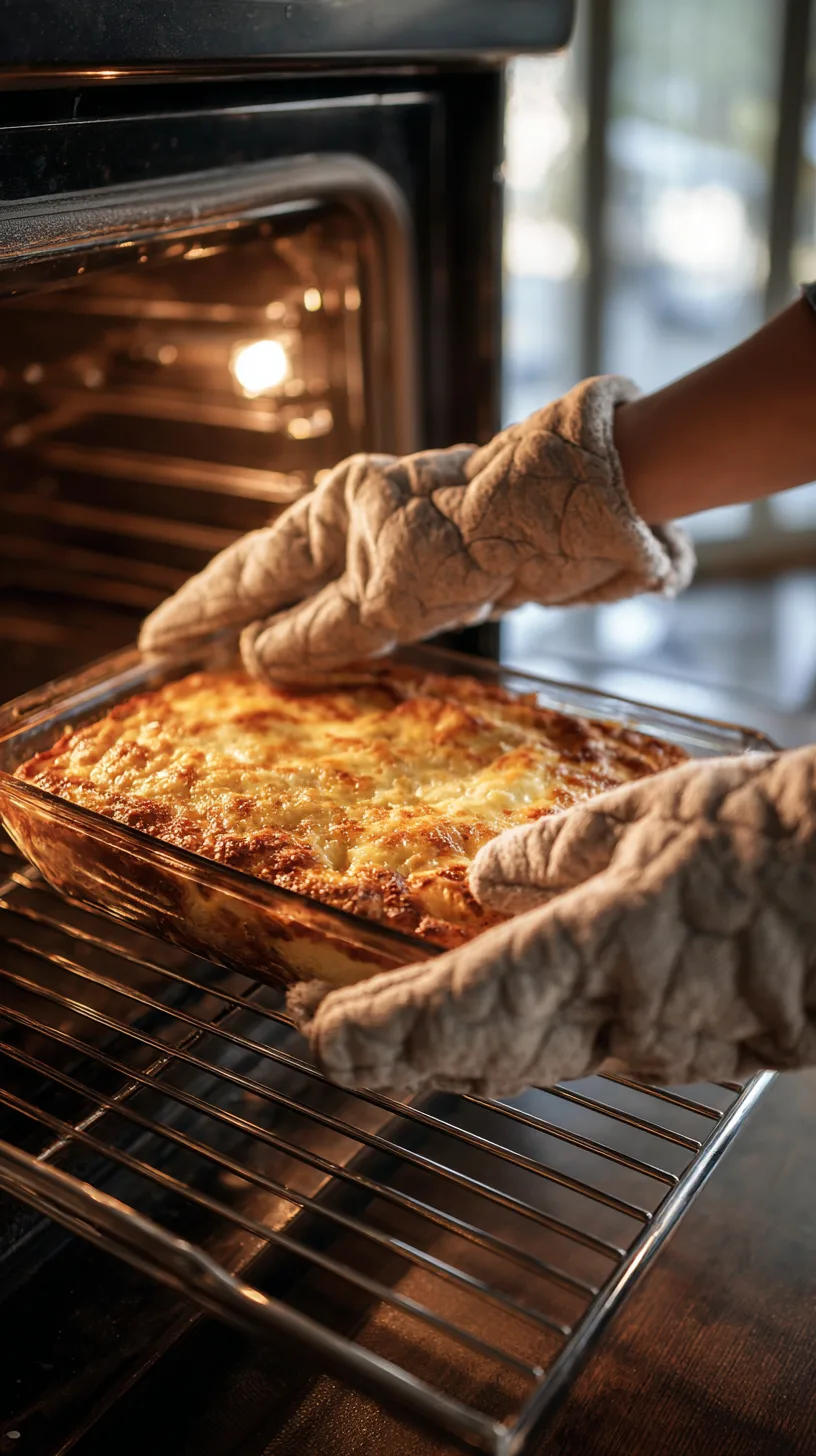
Covered first. Always.
Foil traps moisture. Lets the interior cook gently. Then you uncover and let the top brown. You’re not chasing deep color. You’re watching the center.
The middle should not slosh.
It should barely give when you nudge the pan. A slight jiggle is fine. Liquid movement is not.
Stick a knife in the center. It should come out clean, not coated.
Pull it before you think it’s perfect. It will finish cooking as it rests. Eggs keep moving even after they leave the oven.
I’ve left them in too long before. You get that tight, rubbery texture. Still edible. But you know it could’ve been softer.
That’s the quiet failure that taught me timing is more about watching than counting.
Big pans hide mistakes, especially when you’re measuring by scoops—this breakdown of volume vs weight in cooking explains why two “cups” of bread can act like three once it dries out.
Cooking This at Home vs Feeding a Crowd

At home, this fits in a 9×13 and feeds 10 to 12 comfortably. You slice it, serve fruit on the side, maybe something green to make yourself feel balanced.
For a crowd, it scales cleanly. Double it. Two pans. Rotate them halfway through the bake.
Under time pressure, this is where it shines. It holds well for about 30 minutes after baking. Tent loosely with foil. Don’t seal it tight or the top softens too much.
If you need to reheat, low oven. 325. Covered. Slow and steady. Microwave works, but it changes texture. The eggs tighten. It’s fine for leftovers. Not ideal for guests.
I’ve held versions of this on steam tables before. It survives. But fresh from the oven is different. Always is.
If you’re feeding a bigger Easter morning crew and you’re tempted to “just eyeball it,” don’t—use this guide on how to double a recipe so the custard still sets right and the seasoning doesn’t disappear.
Easter Morning and Why This One Makes Sense
Easter isn’t just about breakfast. There’s usually ham coming later. Potatoes. Salad. Cake.
You don’t need breakfast to compete.
This casserole gives you something warm, savory, filling. It sits quietly next to fruit and coffee and maybe hot cross buns.
It doesn’t fight for attention.
And it doesn’t demand you stand at the stove flipping anything while people are trying to find their shoes.
Ingredient Swaps I’d Actually Stand Behind
Ham instead of sausage works. Especially if you’ve got leftovers. Dice it small. Let it brown slightly before layering it in.
Vegetarian? Skip the meat. Add mushrooms and spinach. Cook the moisture out of them first or you’ll water down the custard.
Hash browns instead of bread can work. But sauté them first. Get some color. Raw frozen hash browns dump water and flatten flavor.
Half and half instead of milk and cream together is fine. Just don’t go all skim. The texture suffers.
Pre-shredded cheese works in a pinch. Freshly grated melts cleaner.
I don’t mess with egg substitutes here. Real eggs matter.
Nutrition Without the Drama
It’s eggs, sausage, cheese, bread.
It’s not a salad.
You get protein. You get fat. You get enough carbs to keep kids from melting down before the egg hunt.
Balance it with fruit. Or don’t. It’s one meal.
Food doesn’t have to solve everything.
Coastal California Chef Notes
Halfway through my career I started noticing how different eggs felt depending on where they came from. Up here along the coast, you crack into one and the yolk sits tall. Deep orange. Thick.
Santa Cruz mornings can still be cold in April. Fog hanging around longer than it should. That kind of weather makes warm breakfast feel necessary, not indulgent.
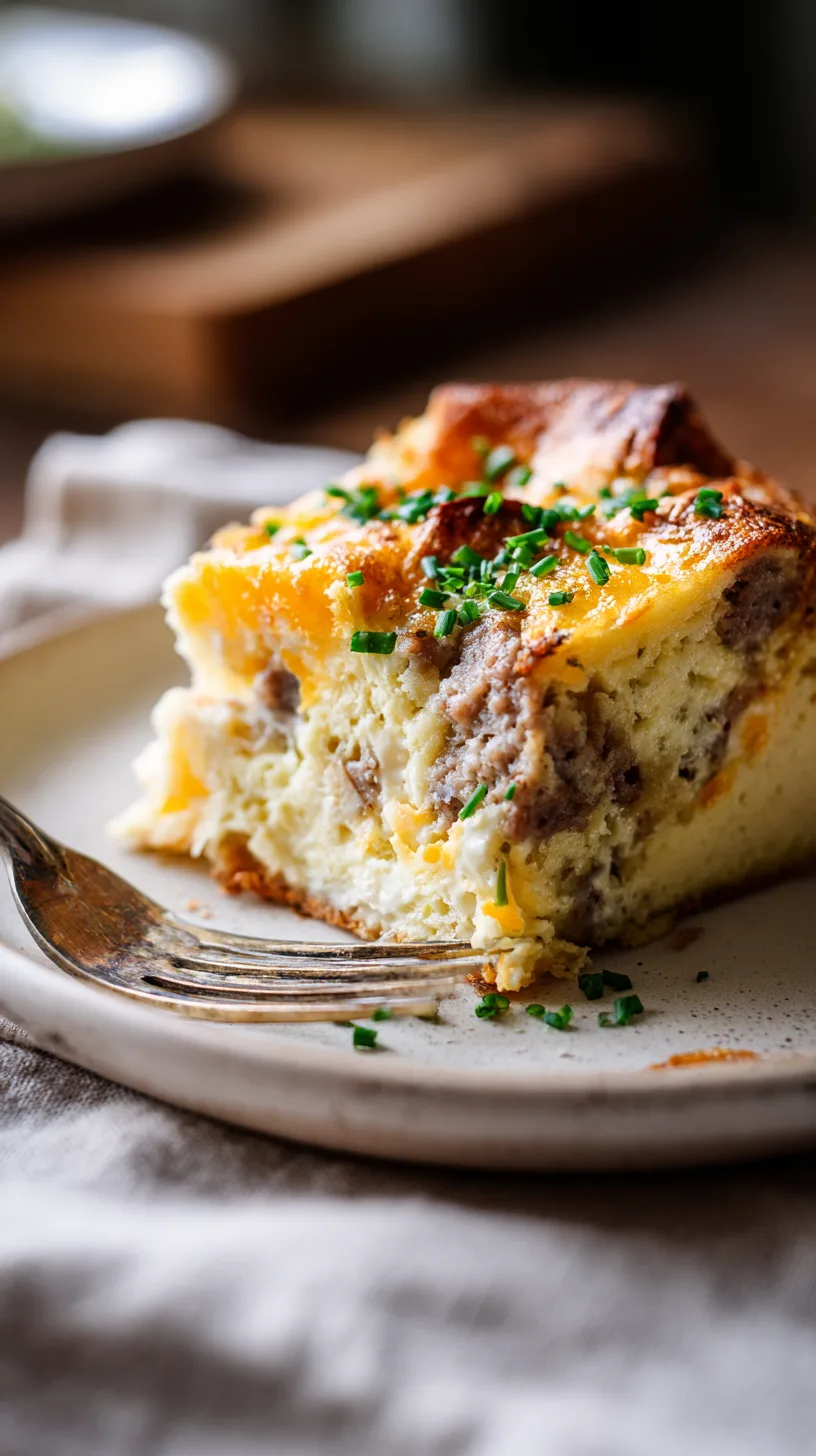
If I’ve got chives from the garden or good parsley from a local stand, I’ll scatter it over the top right before serving. Fresh green against golden brown.
Monterey citrus on the side. Simple slices. Nothing fancy.
The casserole stays grounded. The produce brightens the table.
Scaling Mistakes I’ve Seen
Biggest mistake when doubling this? Not using enough salt.
Volume hides seasoning.
When you scale up, taste the custard before pouring it in. It should taste slightly saltier than you think it needs to be. Once it’s baked with bread and meat, it mellows.
Second mistake? Overcrowding the oven. Two pans need air circulation. Rotate them halfway through.
Third mistake? Cutting too soon. Let it rest. Ten minutes minimum. It slices cleaner. It eats better.
Storage and Leftover Truth
It keeps four days in the fridge. Covered.
Slices reheat well in a low oven. I’ve eaten it cold standing over the counter too. It’s fine. Not glamorous. But fine.
Freezing works best before baking. Wrap tight. Thaw in the fridge overnight before baking. Add a few extra minutes.
Once baked and frozen, the texture changes slightly. Still edible. Just softer.
Easy Breakfast Casserole For Easter Morning
Print
Make Ahead Breakfast Casserole For Easter
- Prep Time: 25 minutes
- Rest Time: Overnight (8 Hours)
- Cook Time: 55 minutes
- Total Time: 1 hour 20 minutes + overnight rest
- Yield: 12 servings 1x
- Category: Breakfast, Brunch
- Method: Baking
- Cuisine: American
Description
A rich, make-ahead breakfast casserole layered with butter-toasted bread, savory sausage, sharp cheddar, and fresh herbs. Assemble the night before and bake fresh on Easter morning for a crowd-friendly brunch that stays tender, set, and never soggy.
Equipment
- 9×13 inch baking dish
- Large skillet
- Large mixing bowl
- Medium mixing bowl
- Whisk
- Cutting board
- Chef’s knife
- Aluminum foil
- Rubber spatula
Ingredients
For the base
- 1 loaf day-old French bread (about 14 ounces), cut into 1-inch cubes
- 3 tablespoons unsalted butter, melted
- 1/2 teaspoon kosher salt
For the filling
- 1 pound breakfast sausage
- 1 small yellow onion, diced
- 1 red bell pepper, diced
- 2 cloves garlic, minced
- 10 large eggs
- 2 cups whole milk
- 1/2 cup heavy cream
- 1 teaspoon Dijon mustard
- 1/2 teaspoon dry mustard
- 1 teaspoon kosher salt
- 1/2 teaspoon freshly cracked black pepper
- 1/4 teaspoon nutmeg
- 2 cups sharp cheddar cheese, shredded
- 1/2 cup Gruyère cheese, shredded
- 2 tablespoons chopped fresh chives
- 1 tablespoon chopped fresh parsley
Instructions
- Prepare the bread base
Preheat oven to 375°F. Toss the bread cubes with melted butter and 1/2 teaspoon salt. Spread onto a sheet pan and bake 10–12 minutes until lightly golden on the edges. Not hard. Just toasted. Let cool slightly. - Reduce oven to 350°F.
- Cook the filling
In a large skillet over medium heat, cook the sausage until browned. Add onion and bell pepper. Cook 3–4 minutes until softened. Stir in garlic and cook 30 seconds more. Remove from heat and cool slightly. - Make the custard
In a large bowl whisk together eggs, milk, heavy cream, Dijon, dry mustard, salt, pepper, and nutmeg until fully combined. - Assemble
Grease a 9×13 baking dish. Spread toasted bread evenly in the bottom. Scatter sausage mixture over the bread. Sprinkle cheddar and Gruyère evenly across the top. Pour the egg mixture slowly over everything. Press gently with a spatula so the custard absorbs evenly. - Finish with chives and parsley.
- Rest
Cover tightly with foil and refrigerate overnight, or at least 1 hour if short on time. - Bake
Remove casserole from refrigerator 30 minutes before baking. Preheat oven to 350°F. Bake covered for 30 minutes. Remove foil and bake another 20–25 minutes until the center is just set and lightly golden. The middle should be barely firm with no liquid movement. - Internal temperature should reach 165°F.
- Let rest 10 minutes before slicing.
Notes
Most overnight breakfast casseroles use plain bread cubes. Toasting the bread in butter first builds flavor and structure. It creates a lightly crisp exterior that absorbs custard evenly without collapsing. That small step prevents the soggy bottom that so many Easter casseroles suffer from. It tastes richer, but it also slices cleaner.
Make Ahead Instructions
Assemble fully, cover tightly, and refrigerate up to 24 hours before baking.
Freezing Instructions
Assemble but do not bake. Wrap tightly in plastic wrap and foil. Freeze up to 2 months. Thaw overnight in refrigerator before baking as directed.
Same Day Option
If not resting overnight, allow at least 60 minutes for the bread to absorb the custard before baking.
Storage
Store leftovers covered in the refrigerator up to 4 days.
Reheating
Reheat individual slices in a 325°F oven for 10–15 minutes or microwave gently in 30 second intervals.
Variations
Ham Version
Replace sausage with 1 1/2 cups diced baked ham.
Vegetarian Version
Omit sausage and increase vegetables. Add sautéed mushrooms and spinach.
Hash Brown Version
Replace bread with 3 1/2 cups thawed frozen hash browns. Sauté hash browns in butter until lightly crisp before assembling.
Spice Option
Add a pinch of cayenne or crushed red pepper for subtle heat.
Serving Suggestions
Serve with fresh fruit, roasted asparagus, citrus salad, or hot cross buns for Easter brunch.
Nutrition
- Serving Size: 1 Serving
- Calories: Approximately 420 calories
- Sugar: 4g
- Sodium: 680g
- Fat: 30g
- Carbohydrates: 20g
- Fiber: 2g
- Protein: 22g
- Cholesterol: 210g
Questions I get From Time To Time
One day is ideal. Two starts to affect texture.
If you want it to hold its shape, yes.
You can. It’ll be softer and richer. Almost too rich.
It needed more time. Or it was baked straight from cold.
You can always add more cheese. Just don’t drown it.
It improves texture. Milk alone works, but it’s leaner.
Let it sit at least an hour. Overnight is better.
The Final Bite
Easter morning doesn’t need theatrics. It needs something warm, steady, and ready before the house wakes up. This casserole does that. It sits quietly in the fridge while you sleep. Then it shows up when it matters.
That’s the kind of food I respect.
If this is the kind of cooking you lean toward—food that works, food that holds up, food that doesn’t waste your time—I share more of it in the Simply Delicious Newsletter by Savore Media. No noise. Just real recipes and honest kitchen notes from someone still cooking for a living.
You can join it here:
Simply Delicious Newsletter
I write it between services.
Now go preheat your oven.
Perfect Pairings
This casserole is rich. Salty. Warm. It carries weight on the plate. So what you serve next to it should either cut through that richness or support it without piling on.
Here’s what I actually put on the table.
Something Green and Bright
A sharp, crisp salad resets your palate after a bite of sausage and melted cheese. My shaved fennel and apple salad does that cleanly. It’s cold. Crunchy. Slightly sweet. It makes the casserole taste even better on the next forkful.
If you want something a little more spring-forward, the asparagus and lemon orzo salad holds its own without competing. Lemon, herbs, texture. It feels like Easter without trying too hard.
Something Warm but Simple
If you’re already turning on the oven, a small batch of quick dinner rolls works better than piling on another heavy side. Tear one open. Butter. Done.
And if you’re serving ham later in the day, this brown sugar bourbon ham balances beautifully with the savory breakfast flavors without feeling repetitive.
Something for the Coffee Crowd
Not frosting. Not cupcakes. Just something that feels like it belongs next to a mug.
A slice of sour cream coffee cake is steady. Moist. Not too sweet. It keeps the morning relaxed.
If you want something brighter, lemon olive oil cake adds just enough citrus lift to balance the richness of the casserole.
A Sauce That Makes It Feel Intentional
A spoonful of hollandaise sauce on the side turns the plate into full brunch mode. Not drenched. Just a light drizzle. The butter and egg play well together.
If you prefer something fresher, a quick dollop of tzatziki sauce adds cool contrast without overwhelming the eggs.
Something to Round Out the Table
If the kids are hovering near the sweets, a loaf of simple banana bread keeps them happy without turning breakfast into dessert.
Or lean into texture with homemade granola and yogurt on the side. Crunch against soft. Cold against warm. It works.
That’s the kind of table I like. One steady casserole in the center. A few thoughtful edges. Nothing forced. Just food that makes sense together.
Disclosure: Every recipe here is developed and tested by Ryan Yates, a Le Cordon Bleu-trained chef with more than 20 years in professional kitchens. Editorial tools help with formatting and structure. This post may contain affiliate links — if you buy through one we may earn a small commission, at no extra cost to you.