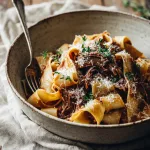

Braised Short Rib Ragu With Pappardelle That Always Gets Quiet at the Table
There are pasta dishes people order because they sound good.
Then there are pasta dishes that make everyone stop talking once the bowls hit the table.
Braised short rib ragu with pappardelle lives in that second camp.
I’ve cooked versions of this dish in tiny beach kitchens in Santa Cruz, on hot lines in San Francisco where the hood fans never slept, and in catering tents where the wind tried to steal my mise en place. Every time, the reaction is the same. Forks slow down. Plates get scraped clean. Someone asks if there’s more sauce hiding in the pot.
After twenty-plus years cooking on the coast, I still get a little rush when short ribs start to brown and the smell of wine hits hot steel. That smell tells you something good is on the way. Something patient. Something worth the wait.
If you want the same slow-cooked comfort in a different lane, my braised short ribs with red wine scratches that cozy itch on another night.
Why Most Short Rib Ragù Falls Flat

Here’s the problem I see again and again.
The meat gets tender, but the sauce tastes heavy. Or flat. Or muddy.
Short ribs bring power. Fat. Collagen. That’s a gift, but it needs steering. Too many home versions rush the base or drown the pot in tomatoes. Others lean so hard on wine that the sauce sharpens instead of settling.
That’s frustrating. You put in three hours and still feel like something’s missing.
The fix isn’t fancy tricks or extra ingredients. It’s restraint, heat control, and knowing when to let the sauce breathe. That’s what this version does well. It cooks slow, finishes clean, and leaves room for the pasta to matter.
What This Dish Is Supposed to Feel Like
This is not red sauce with beef in it.
It’s silkier than that. Deeper. Built on browned meat and vegetables that have actually melted.
When it’s right, the sauce coats the back of a spoon and smells faintly sweet from carrots and onions that gave up everything they had. The beef pulls apart without pressure. The pappardelle drags through the pot and comes out glossy, not soupy.
I want people to feel warmth in their chest when they eat it. The kind you get sitting too close to the oven door on a cold night.
Short Ribs Are the Star, Treat Them Like It
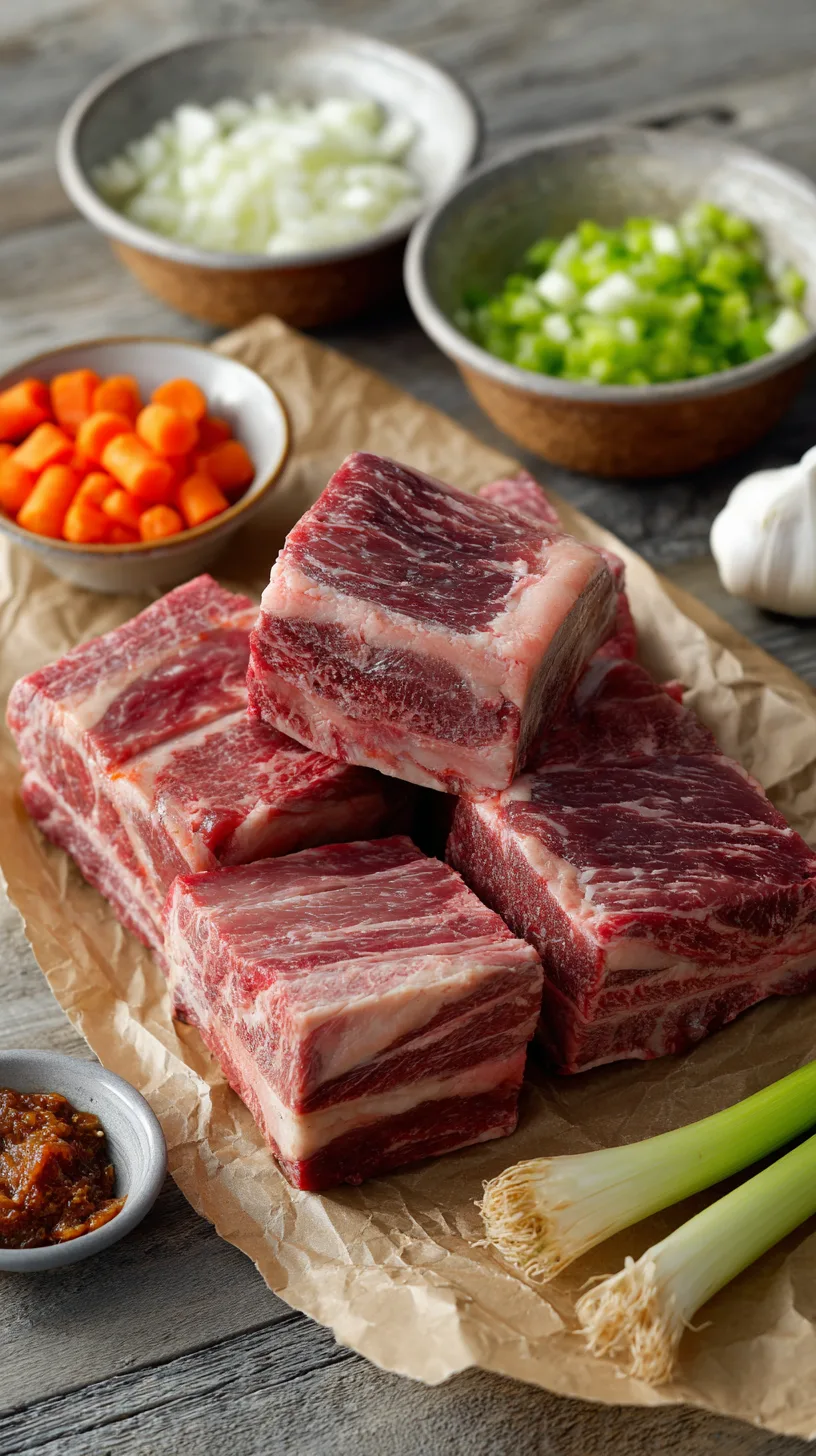
Short ribs should feel heavy in your hands. Dense. Compact.
If they look pale or trimmed too clean, skip them.
At the Santa Cruz farmers market, I’ve watched people squeeze steaks like stress balls. Don’t do that. Look instead. Marbling. Deep red meat. Bones that still carry weight. That’s flavor insurance.
Bone-in ribs give the sauce structure. The collagen from those bones turns broth into something almost creamy once it breaks down. Boneless works, but you lose a little soul.
And searing matters. Hard. No half-hearted browning. I want a crust that sticks just enough to scare you before the wine saves the day.
Short ribs can be confusing at the meat case, so if you want to know what you’re actually looking at before you buy, read Decoding Meat Cuts and you’ll shop with a lot more confidence.
The Soffritto Is Where You Win or Lose
Onions, carrots, celery. Simple, right.
Still, this step ruins more ragù than undercooked meat ever will.
Those vegetables need time. Real time. Medium heat. Stirring that borders on patience testing. They should slump, darken slightly, and smell sweet before anything else goes in.
I learned this lesson during a slammed service in Los Gatos years back. We rushed the base to catch up on tickets. The sauce tasted thin all night. Same ingredients. Same recipe. Different care.
Now I never rush it. Ever.
The Quiet Ingredient That Changes Everything
Here’s the detail that makes this version stand apart.
A small amount of anchovy paste stirred into the soffritto with the tomato paste.
Not enough to taste. Enough to deepen.
I stumbled onto this during a catering prep day when a cook accidentally grabbed the wrong tube. We almost scrapped the batch. We didn’t. The sauce tasted fuller. Rounder. Like it had been simmering longer than it had.
Anchovy doesn’t make the sauce fishy. It disappears into the background and supports the beef the way salt alone never can.
That’s the difference people can’t quite name, but always notice.
Wine Belongs Here, But It Has a Job
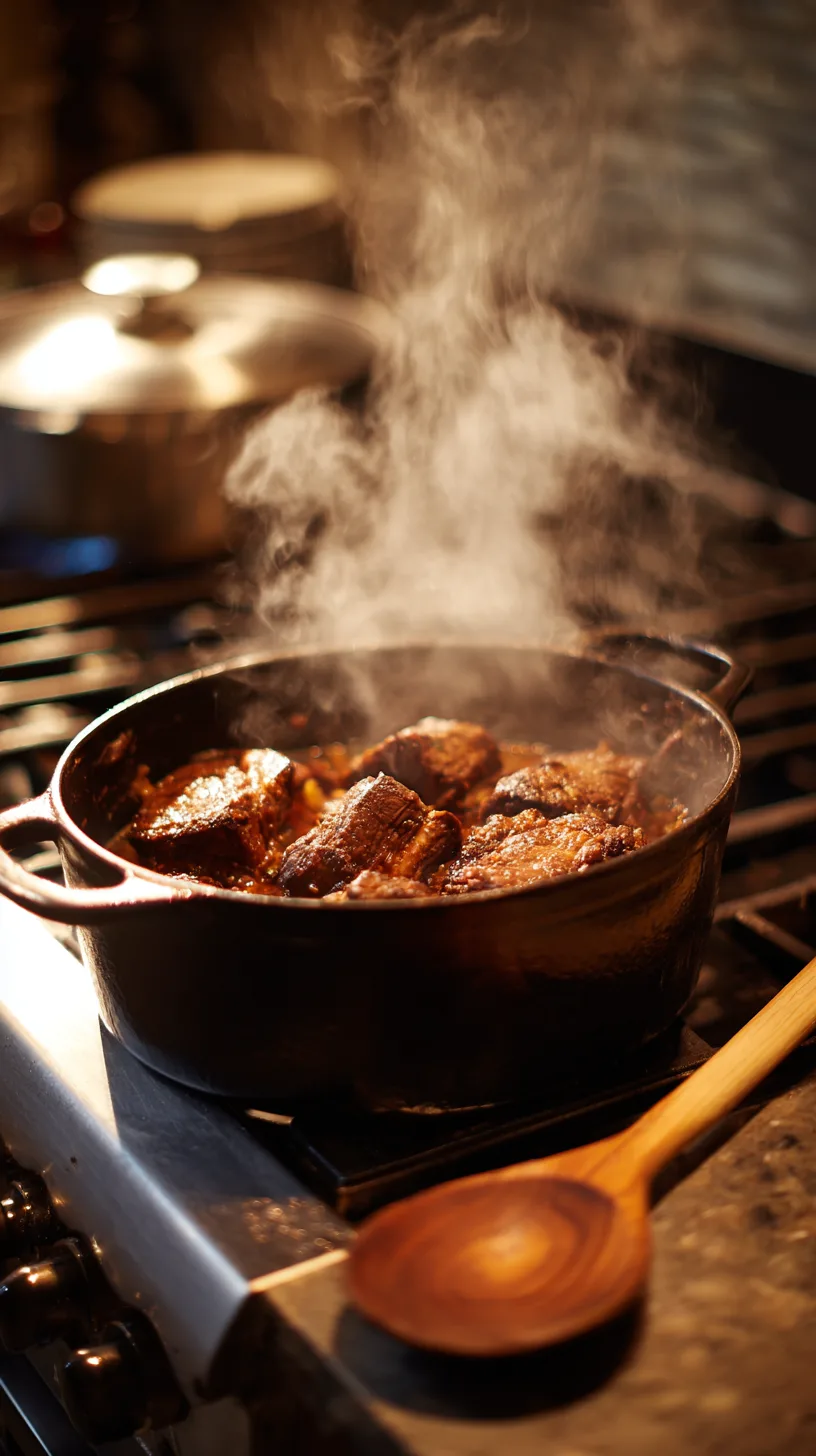
Red wine isn’t decoration. It’s a tool.
Use something dry. Something you’d drink. Nothing sweet. Nothing cooked.
Pour it in hot and let it boil. Let the alcohol burn off. Let it scrape the pot clean.
I’ve watched cooks dump wine in cold and wonder why their sauce tastes harsh. Heat matters. Timing matters.
On the coast, I like using local pinot noir. Light body. High acid. It keeps the sauce from sinking into itself. Zinfandel works too, but use less. It can bully the pot.
That stuck-on browned layer is pure flavor, and how to deglaze a pan shows the exact cue I wait for before the wine goes in.
Slow Heat, Covered, Then Uncovered
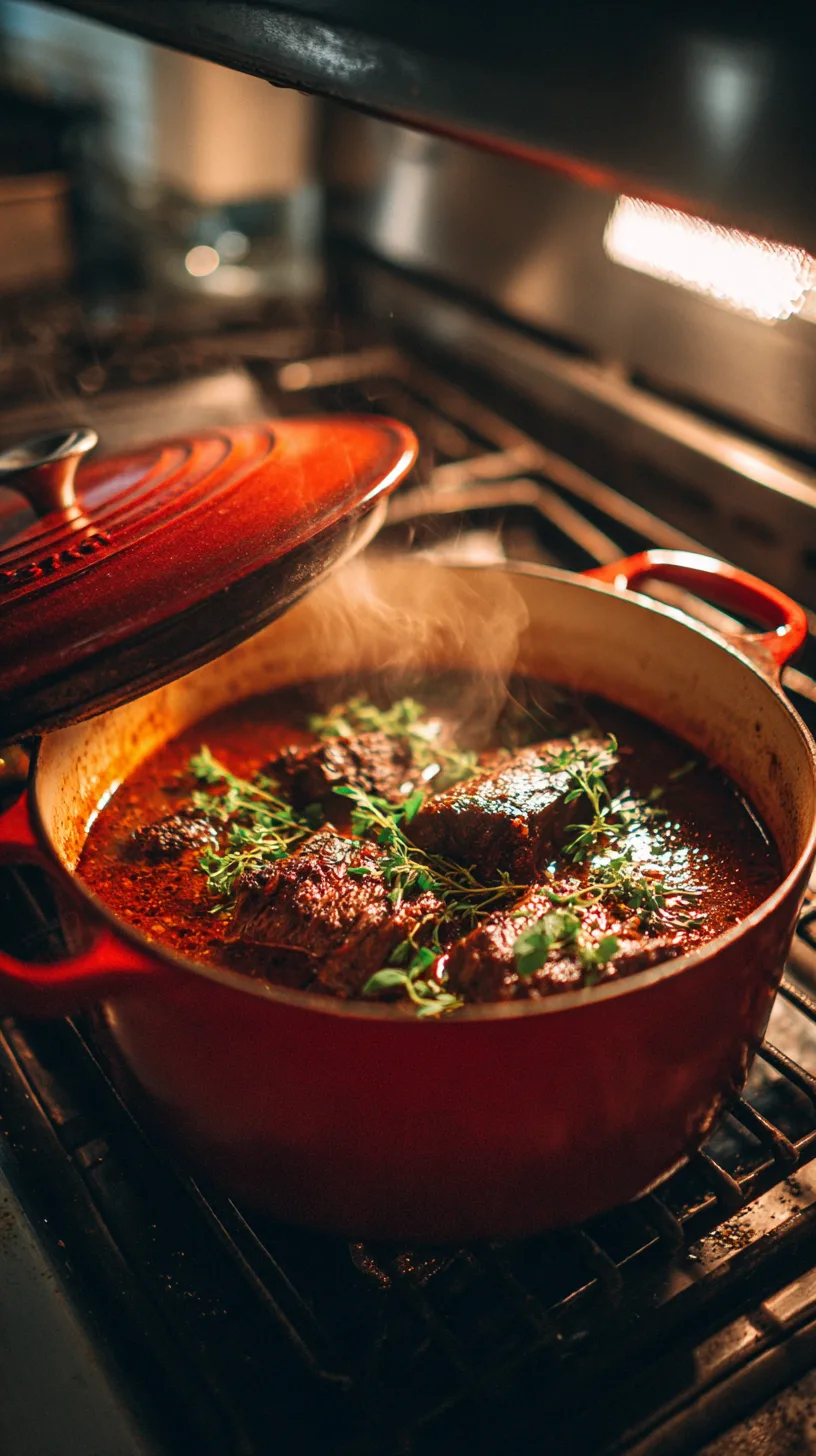
The oven does the real work here. Low heat. Lid on. No peeking.
Three hours later, the meat should give up with almost no resistance. If it doesn’t, it goes back in. No arguing. The clock doesn’t decide tenderness.
After shredding, the lid comes off. This is where texture gets fixed. Fifteen minutes of gentle simmer tightens the sauce and lets excess moisture drift away.
I’ve pulled this too soon before. The sauce looked fine. Ate thin. Learned my lesson.
If “braise” still feels like a foggy word, what braising really is makes the short rib ragu method feel simple and predictable.
Pappardelle Is Not Optional
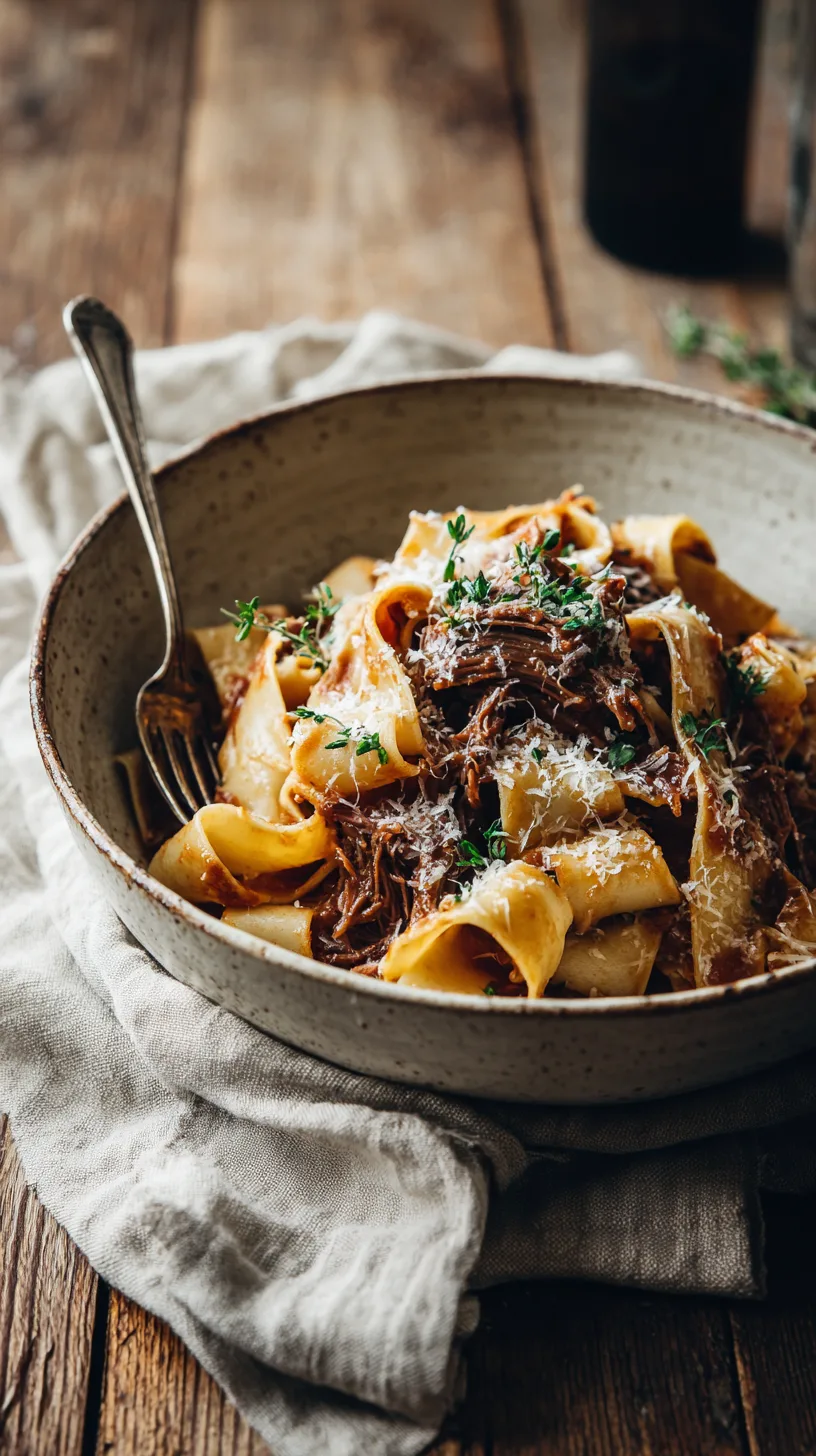
Wide pasta matters.
Thin noodles disappear under this sauce. Pappardelle stands its ground.
When you toss the pasta straight into the ragù with a splash of starchy water, something clicks. The sauce grabs. The noodles bend without breaking. Everything becomes one thing.
I’ve watched cooks plate sauce on top like chili. That’s not it. The marriage happens in the pot.
If your pappardelle timing stresses you out, Mastering the Boiling Cooking Method is the quick reset that keeps noodles firm and happy.
Cooking for Six or Sixty
At home, this feeds a family with leftovers that get better overnight.
In catering kitchens, I’ve scaled this to hotel pans and fed crowds who didn’t know each other five minutes earlier.
The trick at volume is finishing. Cook the sauce fully ahead. Cool it fast. Reheat gently. Cook pasta fresh and marry small batches as needed.
Never toss all the pasta at once for a crowd. That’s how you lose control.
If you’re feeding a bigger table and you don’t want the sauce to drift, How to Double a Recipe helps you scale without losing that deep ragu balance.
Storage, Freezing, and Real Life
The sauce keeps well for four days cold. Longer if you’re lucky.
Freeze the ragù by itself. Not the pasta.
Reheat slowly. Add water or stock. Stir patiently. It comes back.
If it tastes flat on day two, a pinch of salt or a splash of water usually fixes it. Fat dulls seasoning as it cools.
Recipe For Short Rib Ragu With Pappardelle
Print
Short Rib Ragu With Pappardelle
- Prep Time: 30 minutes
- Cook Time: 3 hours 15 minutes
- Total Time: 3 hours 45 minutes
- Yield: 6 servings 1x
- Category: Main Course
- Method: Braising, Oven
- Cuisine: Italian
Description
This braised short rib ragu is slow cooked until the meat turns spoon-tender and the sauce becomes deep, rich, and balanced. Wide pappardelle noodles hold the sauce well and turn this into a true comfort dish. The flavor is bold yet smooth, with careful attention paid to texture and finish.
Equipment
- Large Dutch oven with lid
- Large pot for pasta
- Tongs
- Wooden spoon
- Fine mesh skimmer or spoon
- Cutting board
- Sharp knife
Ingredients
For the Short Rib Ragu
- 3 pounds bone-in beef short ribs
- 2 teaspoons kosher salt
- 1 teaspoon black pepper
- 2 tablespoons olive oil
- 1 large yellow onion, finely diced
- 2 carrots, finely diced
- 2 celery stalks, finely diced
- 5 garlic cloves, minced
- 2 tablespoons tomato paste
- 1 teaspoon anchovy paste
- 2 cups dry red wine
- 1 can (28 ounces) San Marzano tomatoes, crushed by hand
- 1 cup beef stock
- 1 bay leaf
- 2 sprigs fresh thyme
- 1 small sprig fresh rosemary
- 1 Parmigiano Reggiano rind
For the Pasta
- 1 pound pappardelle pasta
- 1 cup reserved pasta cooking water
For Serving
- Freshly grated Parmigiano Reggiano
- Chopped fresh parsley or basil
- Olive oil, optional
Instructions
- Season the short ribs evenly with salt and pepper.
Heat the olive oil in a Dutch oven over medium-high heat.
Sear the short ribs on all sides until deeply browned.
Remove the short ribs and set them aside. - Lower the heat to medium.
Add the onion, carrot, and celery to the pot.
Cook slowly until soft and lightly golden.
Stir often and scrape the bottom of the pot. - Add the garlic and cook briefly until fragrant.
Stir in the tomato paste and anchovy paste.
Cook until the paste darkens and coats the vegetables. - Pour in the red wine.
Scrape up all browned bits from the pot.
Simmer until the wine reduces by about half. - Add the crushed tomatoes and beef stock.
Return the short ribs to the pot.
Add the bay leaf, thyme, rosemary, and parmesan rind. - Bring to a gentle simmer.
Cover and transfer to a 325°F oven.
Braise for 3 hours until the meat pulls apart easily. - Remove the pot from the oven.
Skim excess fat from the surface.
Remove the herbs, rind, and bones. - Shred the short rib meat with a fork.
Return the meat to the sauce.
Simmer uncovered on the stove for 15 minutes to tighten the sauce.
Taste and adjust seasoning. - Cook the pappardelle in salted water until just al dente.
Reserve one cup of pasta water before draining. - Add the pasta directly to the ragu.
Toss gently over low heat.
Add pasta water as needed to loosen and gloss the sauce. - Serve hot with parmesan and fresh herbs.
Notes
The anchovy paste is the quiet detail that sets this ragu apart.
It melts into the soffritto and never tastes like fish.
It deepens the meat flavor and sharpens the sauce in a subtle way.
This step replaces the need for extra salt later and adds balance without weight.
Let the ragu rest for 15 minutes before serving if time allows.
The flavor settles and the texture improves.
This ragu can be made one day ahead.
Store the sauce separately from the pasta.
Reheat slowly with a splash of water or stock.
The sauce freezes well for up to three months.
Freeze without the pasta for best results.
Pappardelle works best, though rigatoni or tagliatelle also hold the sauce well.
Nutrition
- Serving Size: 1 Serving (Prepared)
- Calories: Approximately 720 calories
Nutrition, Honestly
Yes, there’s protein. Yes, there are vegetables.
No, this isn’t diet food.
There’s fat. There’s pasta. That’s fine. This dish feeds people, not trends. Balance it with greens. Walk afterward. Enjoy it.
If you’ve never cooked with a scale and you’re curious why chefs lean on them, the importance of kitchen scales lays it out in plain English.
Swaps I’ve Actually Tried
You can use chuck instead of short ribs. It works. It lacks bones, so the sauce feels thinner.
You can skip wine and use stock with a splash of balsamic. It’s acceptable. It’s not the same.
You can finish with butter or cream. I don’t. The sauce doesn’t need it if the meat was right.
If you want to understand why some sauces feel glossy and others feel flat, Essential Sauce Terms is the little guide that makes your finishing instincts sharper.
Coastal California Touches I Love
I finish this with herbs from the yard when I can. Parsley. Basil. Sometimes a hint of rosemary if it’s young and soft.
I’ve served it with sourdough in Santa Cruz, with polenta at a winery in Monterey, and once with garlic bread made in a borrowed pizza oven that ran too hot. Still worked.
That’s the beauty of it.
A Kitchen Memory That Stuck
Years ago, during a long holiday prep day, my youngest snuck into the kitchen and dipped a spoon straight into the pot. No pasta. Just sauce.
He looked up, nodded once, and walked out.
No words. Highest praise I’ve ever gotten.
When the ragu is bubbling and you want something warm to drag through the last streaks in the bowl, bake my Italian focaccia and call it a very good night.
FAQ’s
Yes. It improves overnight.
Freeze the sauce, not the pasta.
You don’t need them. You’ll miss them.
Depth. Quiet umami. No fish taste.
Skim the fat and simmer uncovered longer.
Yes. Brown everything first. Low heat. Long time.
Pinot noir. Sangiovese. Anything dry and honest.
The Final Bite
Dishes like this don’t show up by accident.
They come from time on your feet, mistakes you don’t repeat, and pots that get scraped clean because you stayed patient.
This braised short rib ragu with pappardelle is one of those meals that earns its place. Cook it once and it tends to stick around in your rotation.
If you like cooking that feels grounded, useful, and honest, I share more of that thinking in the Simply Delicious Newsletter by Savore Media. It’s where I talk food the way I do here, from a working kitchen, not a pedestal. You can find it here: Simply Delicious Digest
Thanks for spending time at the stove with me. I’ll save you a seat at the counter next time.
Disclosure: Every recipe here is developed and tested by Ryan Yates, a Le Cordon Bleu-trained chef with more than 20 years in professional kitchens. Editorial tools help with formatting and structure. This post may contain affiliate links — if you buy through one we may earn a small commission, at no extra cost to you.