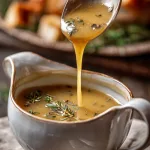
Turkey Gravy From Pan Drippings That’ll Make You Believe In Sauces Again
There’s a point in every meal where the sauce takes over. The turkey’s carved, the potatoes are steaming, everyone’s pretending to be patient… and then that deep, golden gravy hits the plate.
You watch it slide over everything and suddenly the room goes quiet.
That’s the power of a good sauce.
And I’ve always believed everything is better with one.
Maybe it’s the years I’ve spent chasing balance – a little fat, a little heat, that quiet swirl of flour in the pan. There’s something romantic about making a roux. It’s ancient, simple, humble, and still the soul of every good gravy you’ll ever taste.
The Secret Hiding In Your Roasting Pan

When the turkey comes out of the oven, don’t clean that pan. Don’t even think about it.
That mess, the little pools of fat, the stuck bits of skin, the dark corners where juice caramelized – that’s pure flavor waiting to happen.
I used to watch my grandmother tilt the roasting pan toward the light and grin like she’d just found buried treasure. She called it “liquid gold,” and she wasn’t wrong.
You just have to know how to catch it.
Want a roasting pan full of “liquid gold” to work with? Start by cooking a juicy bird like a Butterball Turkey Breast so your drippings are rich and ready for gravy.
Collecting The Drippings
Start by pouring everything from the pan, the juices, the fat, the browned bits, into a large measuring cup or bowl. Give it a few minutes to rest. The fat will rise, the juices will fall, and you’ll see two clear layers.
Spoon off most of the fat but don’t throw it away. Keep about four tablespoons. That’s what’s going to carry the flavor through your roux.
Now, set the empty roasting pan over a burner. Add a splash of warm broth or water and scrape with a wooden spoon. The brown bits will loosen and dissolve. That’s the secret weapon of your gravy right there – the roasted fond. Pour that back into the drippings.
Keep the flavors clean and balanced by seasoning the turkey simply – this no-nonsense blend from Simple Seasoning For Thanksgiving Turkey gives you drippings that sing.
Ingredients You Actually Need
No mystery packets. No thickening powders. Just five things and a patient hand.
- Fat – about 4 tablespoons of turkey fat, or butter if you’re short.
- Flour – ¼ cup all-purpose.
- Stock – 3 to 4 cups of warm turkey or chicken broth.
- Drippings – the pan liquid you saved.
- Salt and pepper – enough to wake it up.
That’s it. You can add herbs, cream, or wine later if you like, but the heart of it lives in that short list.
The Roux, Where It All Begins
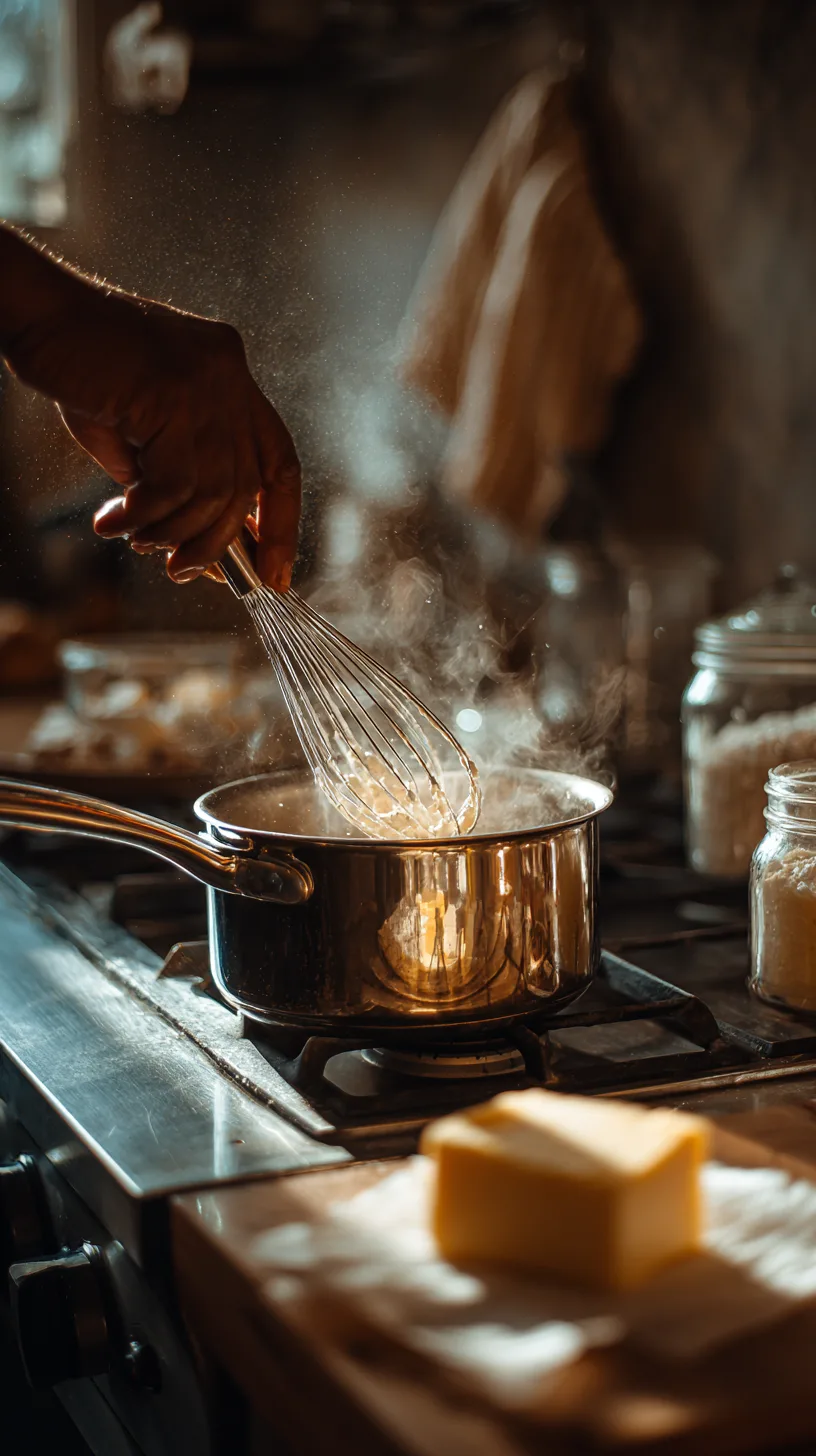
This is the part that still gets me. Every time.
Put your fat in a saucepan over medium heat and let it warm until it just whispers. Sprinkle in the flour and start whisking. It’ll clump, then smooth, then start to smell faintly like toasted bread.
That smell right there – that’s the moment the raw taste disappears. You’re not cooking anymore, you’re coaxing flavor out of nothing but patience and heat.
Don’t rush it. Don’t walk away. Two minutes, maybe three. You’ll feel when it’s ready. The bubbles change sound – less hiss, more sigh. That’s when you move.
Set your gravy beside sides that love it – these caramelized Maple Roasted Brussels Sprouts catch every drop in the best way.
Turning Drippings Into Gravy

Now grab your warm stock.
Keep whisking while you slowly pour in the drippings and deglazed liquid. It’ll sputter and steam, but stay with it.
Pour a little stock at a time, whisk until smooth, then pour more. The goal isn’t speed – it’s silk.
After all the liquid’s in, bring the heat down and let it simmer. Stir now and then, like you’re checking on an old friend. Within ten minutes, it thickens and deepens in color. The flour does its quiet work, pulling everything together.
Taste. If it’s too salty, add a splash of stock. Too flat, a pinch of salt or squeeze of lemon.
When it coats the back of a spoon and leaves a soft trail, it’s done.
If your gravy leans too salty, serving it over naturally sweet sides like Sweet Potato Casserole brings it back into balance fast.
The Feel Of The Right Texture
You can tell by touch more than sight. Dip a spoon, drag your finger through the back. The line should hold for a second before it closes. That’s perfect gravy.
If it’s too thick, add more warm broth. Too thin, simmer a little longer. It’s not science – it’s memory. You’ll know it when it’s right.
Seasoning Like A Cook Who Cares
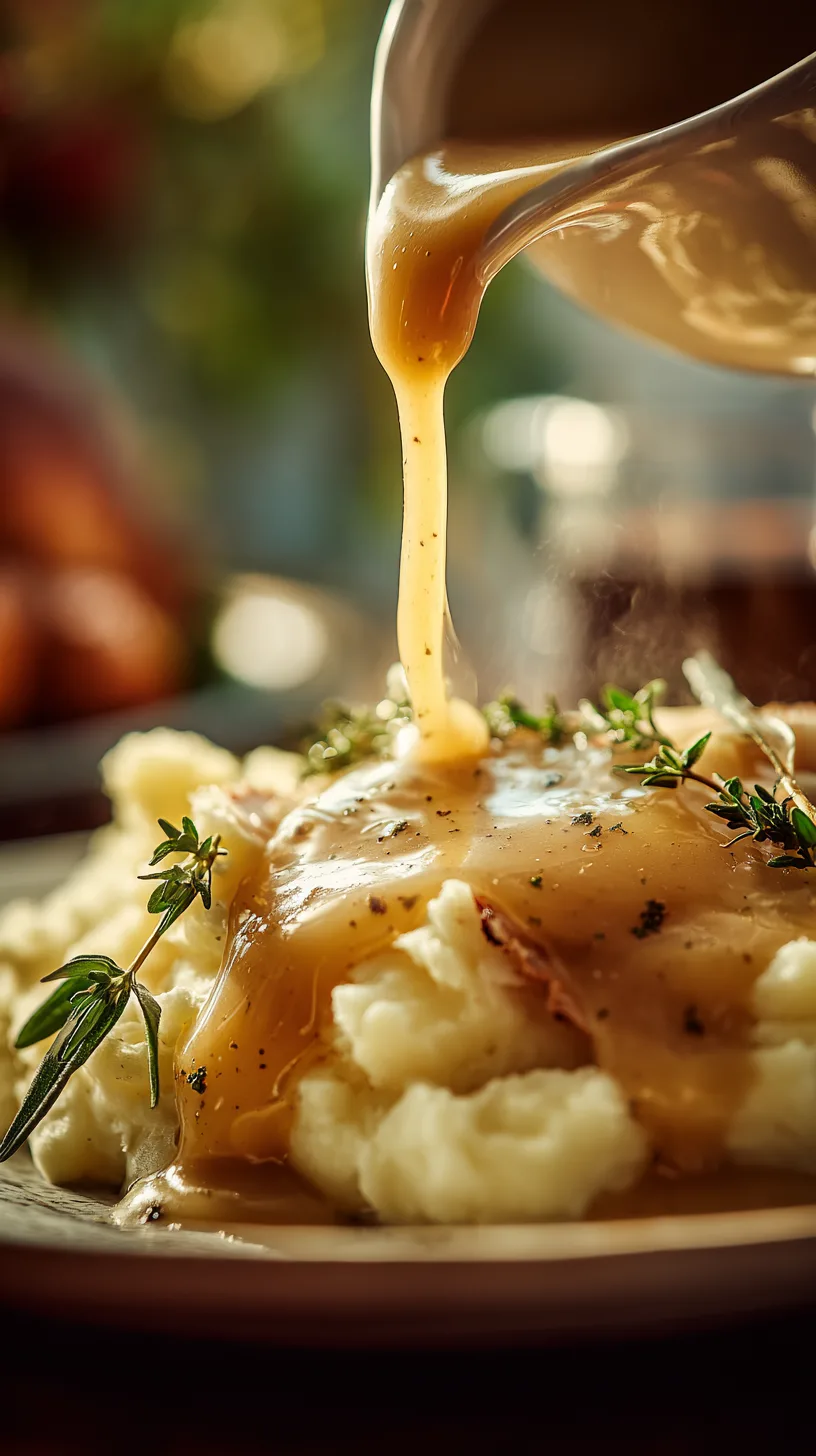
This part’s personal.
I always start with salt and black pepper, but sometimes I’ll drop in a sprig of thyme, maybe a touch of rosemary if the kitchen already smells like it. Once in a while, a tiny spoon of Dijon to brighten it, or a splash of cream when no one’s watching.
A good gravy shouldn’t shout. It should whisper flavor over every bite.
Serving It Hot And Proud
Warm your gravy boat or serving dish first – nothing kills a sauce faster than a cold bowl. Stir once more before pouring, taste again, and don’t be afraid to serve it a bit loose. It’ll thicken as it sits.
I like to ladle it over the turkey first, then let the rest find its way across the plate. It soaks into potatoes, kisses the stuffing, finds every corner that needs comfort.
Saving What’s Left (If Any)
Let it cool, then pour it into a jar or container. It keeps four days in the fridge, three months in the freezer.
When reheating, go slow. Low heat, whisking often, maybe a splash of broth to loosen it back up. Never boil it, gravy hates aggression.
Little Fixes For Common Trouble
Got lumps? Pass it through a fine strainer or give it a quick whirl in a blender.
Too salty? Add unsalted broth or a pinch of sugar.
Too pale? Let it simmer longer or toast your roux darker next time.
Too greasy? Lay a paper towel on top for a second, lift, toss. Easy.
Gravy’s forgiving. It wants to be good.
Gluten-Free Way
If someone at your table avoids gluten, skip the flour and use cornstarch instead. One tablespoon mixed with two tablespoons cold water makes a perfect slurry.
Whisk it into hot broth and drippings near the end, simmer until glossy.
Same comfort, same heart, just a different path there.
Why I Never Tire Of Making It
I’ve cooked a lot of things in my life – some complicated, some fast. But this? This is the one that always feels honest.
It’s flour and fat. Heat and time. Nothing flashy. You watch it change under your hand, and it reminds you that food doesn’t have to be fancy to matter.
Every time I stir that roux, I think about the people who’ll be sitting down in a few minutes. About how something so simple ties everything together. It’s hard not to smile when you pour that first ladle over turkey and see someone’s eyes close for a second.
That’s the moment I’m chasing every year.
Quick Chart For Reference
| Step | What You’re Doing | Why It Matters |
| 1 | Collect drippings & fat | Captures the flavor base |
| 2 | Make a roux | Builds body and depth |
| 3 | Add stock & whisk | Keeps it smooth |
| 4 | Simmer & season | Develops balance |
| 5 | Serve warm | Keeps texture perfect |
Common Questions People Ask Me
Yes, and it even tastes better the next day. Just reheat gently and whisk before serving.
Top up with stock and use butter for the missing fat. Still works.
It boiled too hard or had too much fat. Whisk in warm broth and it’ll come back.
It should coat a spoon but still pour easily. Think warm honey, not pudding.
Sure. A splash of white wine during deglazing gives brightness. Just cook off the alcohol first.
You can. Roast some onions and carrots in the pan for extra flavor if you go that route.
Warm liquid and constant whisking. That’s the whole trick.
Disclosure: Every guide here is written and tested by Ryan Yates, a Le Cordon Bleu-trained chef with more than 20 years in professional kitchens. Editorial tools help with formatting and structure. This post may contain affiliate links — if you buy through one we may earn a small commission, at no extra cost to you.